
Value-Added Product (VAP) portfolios rarely fail at launch. More often, they begin to weaken quietly in month 12, month 18, or once early commercial excitement gives way to operational reality.
The issue is seldom that the product was poorly conceived. It is that the portfolio was not managed as a living system after launch.
The strategic reality is clear: the VAPs organisations launch today are not necessarily the VAPs their customers, partners, or balance sheets will need tomorrow.
In a market defined by shifting customer expectations, supplier variability, inflationary pressure, and changing usage patterns, product relevance is not a launch decision — it is a lifecycle discipline.
Markets move. Usage behaviour changes. Claims severity increases. Supplier performance fluctuates. Customer expectations evolve. Portfolios that are not actively monitored and refined eventually drift away from the assumptions on which they were built.
Yet many organisations still treat VAPs as “set-and-forget” offerings: launched with energy, reported on reactively, and adjusted only once performance pressure becomes visible. This is where the gap between product launch and portfolio leadership becomes most apparent.
The leaders take a different view.
They run VAP portfolios as living, data-informed operating systems — with clear ownership, disciplined review forums, transparent performance signals, and the ability to act before small issues become portfolio-level risks.
Lifecycle discipline is the new competitive advantage
High-performing organisations understand a simple but powerful principle: early detection beats late correction. By the time poor experience, deteriorating loss ratios, or partner dissatisfaction become obvious, the opportunity to intervene efficiently has often already narrowed.
Effective lifecycle management therefore requires an intentional operating rhythm, not occasional product reviews. The strongest portfolios are governed through structured forums and consistent management information, including:
This rhythm is not administration. It is portfolio risk management.
Done well, it protects partner trust, improves customer outcomes, strengthens pricing confidence, and creates the evidence base needed to make timely commercial decisions.
When the signals speak, leaders act early
Leading VAP teams do not wait for lagging indicators to confirm that a portfolio is under strain. They watch the early signals — the subtle movements in utilisation, severity, complaints, leakage, supplier performance, and customer sentiment that reveal whether a product remains fit for purpose.
These indicators create practical decision points:
A disciplined lifecycle model turns this information into confident action: adjusting eligibility, refining benefit design, improving communication, resetting supplier expectations, or recalibrating pricing before issues escalate.
Discipline creates confidence for partners and customers
Portfolio discipline creates value beyond internal governance. For partners, it provides predictability. For customers, it improves consistency. For administrators, it shifts the role from operational service provider to strategic value creator.
When the operating model is transparent, structured, and proactive, partners benefit from:
In this environment, credibility is built through consistency: the ability to explain performance clearly, identify emerging risks early, and demonstrate that the portfolio is actively managed rather than merely reported on.
The future belongs to dynamic portfolios
The most successful VAP portfolios share one defining characteristic: they never stop improving. Their advantage is not simply that they were designed well at the outset, but that they are continuously informed by claims experience, customer behaviour, supplier performance, operational insight, and market change.
Static portfolios decline.
Dynamic portfolios lead.
For organisations serious about sustainable growth, launch day should no longer be viewed as the finish line. It is the start of a disciplined lifecycle: one that connects insight to action, protects partner value, and keeps the customer proposition relevant over time.
Leadership does not happen at launch. It happens in the lifecycle.
In many organisations, pricing is still treated as a technical output: a tariff, a rate chart, a spreadsheet calculation or the final step before market launch.
For high-performing Value-Added Product portfolios, that view is no longer sufficient.
Pricing has become one of the most important strategic disciplines in the portfolio management toolkit sitting at the intersection of customer value, claims experience, partner confidence, risk appetite and long-term profitability.
This matters now more than ever. Across the insurance and mobility ecosystem, portfolios are being tested by rising claims costs, supplier inflation, more demanding customers, evolving digital service expectations and growing pressure for simpler, fairer and more transparent propositions. In this environment, sustainable pricing is not a back-office actuarial exercise. It is a leadership decision that determines whether a product can continue to deliver value in market without eroding margin, trust or service quality.
The first discipline: Pricing with honesty
Sustainable pricing starts with an honest view of performance. It requires organisations to look beyond idealised assumptions and interrogate what the portfolio is actually experiencing. The most effective portfolios consistently ask three strategic questions:
When these questions become part of the pricing rhythm, pricing moves from static calculation to active stewardship. Leaders gain a clearer view of where risk is emerging, where value is being created, and where margin is being diluted. Partners gain confidence that the portfolio is being managed with discipline. Customers benefit from products that remain relevant, deliverable and financially sustainable.
The calibration gap: Why good products lose momentum
Many VAP portfolios do not underperform because the original proposition was weak. They underperform because the pricing was never recalibrated after market reality changed.
Launch assumptions have a limited shelf life. Customer behaviour changes. Claims frequency shifts. Severity emerges in unexpected categories. Supplier costs move. Fraud patterns adapt. Distribution channels perform differently. Without regular recalibration, a portfolio that looked balanced at launch can quietly become mispriced, volatile and difficult to defend.
The organisations that are outperforming the market increasingly treat pricing as a living system, continually informed by:
This requires a deliberate pricing cadence: quarterly performance reviews, event-driven repricing triggers, forward-looking scenario modelling and cross-functional decision-making that brings product, actuarial, claims, operations, sales and partner management into the same conversation.
Value alignment: The point where price, promise and trust meet
Customers do not judge price in isolation. They judge fairness. A VAP priced beyond its perceived benefit feels opportunistic. A VAP priced too low may appear attractive initially, but can quickly damage trust if benefits are later reduced, exclusions tighten or claims service deteriorates.
The strategic advantage lies in value alignment:
Pricing is ultimately brand protection
The strongest pricing strategies do more than protect the loss ratio. They protect the promise of the product. They ensure that the benefit sold to the customer is the benefit the business can continue to deliver consistently, profitably and without compromising the service experience.
For organisations serious about long-term VAP success, pricing should not be treated as the final commercial decision before launch. It should be one of the first strategic questions asked: what value are we promising, what risk are we accepting, and what level of price discipline is required to sustain both? In a market defined by volatility, affordability pressure and rising customer expectations, pricing that performs is not simply about getting the number right. It is about building a portfolio that can withstand change, earn trust and create enduring value
Most organisations offer a suite of Value‑Added Products (VAP’s), but not all VAPs perform equally. The difference between high-performing and underperforming VAPs is simple: relevance. The question every organisation should ask is: Are customers actually using the benefits they’re paying for?
The VAP market has become increasingly crowded. Across insurers, OEMs, finance houses, dealers and mobility ecosystems, customers are presented with multiple benefits that promise convenience, protection and peace of mind.
Utilisation is more than an operational metric. It is a signal of relevance. When customers actively use a benefit, it means the product has moved beyond being an optional extra and has become part of the customer’s lived ownership experience.
When utilisation is low, it often tells us something less comfortable: the proposition may be well-intended, but it is not sufficiently understood, needed or accessible.
The shift: From adding benefits to earning usage
For many years, a VAP strategy has often been shaped by breadth: more benefits, broader bundles and more visible product features. But customers do not measure value by the number of line items in a brochure. They measure it by whether the product helps them at a moment that matters.
This is where relevance becomes the real differentiator. A high-utilisation VAP is not necessarily the most complex product, the most heavily bundled product or the one with the longest list of features. It is the product that connects clearly to a recognised customer need, is simple to understand, and can be accessed with minimal friction.
The challenge, therefore, is not simply to build more. It is to build with sharper intent. Product Development teams need to ask a more disciplined question: what will make this benefit meaningful enough for a customer to use?
Data should challenge assumptions, not simply confirm them
Customer relevance cannot be designed through instinct alone. Behavioural, claims, usage and market data give us a more honest view of what customers value in practice. They show where customers engage, where they hesitate, where they abandon a process and where perceived value does not match the price paid.
Used well, data forces better product decisions. It helps separate benefits that genuinely support the customer from those that merely add weight to the proposition. It also gives product, pricing and operational teams a shared evidence base for deciding whether a benefit should be retained, redesigned, simplified or retired.
Segmentation is where relevance becomes commercial
A broad, average-customer view rarely produces strong utilisation. Different customer groups experience value differently. A dealer customer, a fleet operator, a financed vehicle owner and an insurance policyholder may all need support, but not necessarily the same support, at the same time, or through the same channel.
This makes modularity critical. The future of VAP design is not unlimited choice; it is disciplined flexibility. Benefit architecture should allow propositions to be tailored by segment, channel and risk profile, while still protecting pricing integrity, governance standards and operational scalability.
Simplicity is a utilisation strategy
Even a relevant benefit can fail if it is hard to understand or difficult to use. Customers should not have to work out what a product means, when it applies or how to access it. If the value is hidden in technical language, complex exclusions or a cumbersome claims process, utilisation will suffer.
This is why communication and service design belong at the centre of VAP strategy.
Plain language, clear usage triggers, transparent limits and proactive reminders are not administrative details. They are the mechanisms that convert product ownership into product usage.
The leadership question: Are we designing products customers will use?
The organisations that will lead in VAP performance are not the ones with the longest list of benefits. They will be the ones that can prove that their propositions are relevant, usable and commercially sustainable. High utilisation is not accidental; it is the result of disciplined product design, evidence-based pricing, clear customer communication and operational follow-through.
Relevance wins because it creates the conditions for trust. When customers understand the benefit, recognise its purpose and can use it when it matters, the product becomes more than an add-on. It becomes part of the value promise. That is the blueprint for high-utilisation VAPs.
Value-Added Products (VAPs) have moved well beyond their traditional role as optional extras added at the end of a sale. In today’s market, they are becoming a core part of how businesses grow, differentiate themselves, and strengthen customer relationships. Customers are no longer looking only for the primary product; they are looking for protection, convenience, certainty, and support across the full ownership journey. For leaders facing tighter margins, increased competition, and more value-conscious customers, well-designed VAPs offer a way to improve retention, deepen customer engagement, and create new sources of sustainable revenue.
This is why VAPs need to be managed as strategy, not as a product catalogue. The starting point is understanding where customers experience friction, uncertainty, or risk, and then designing benefits that solve those specific needs. In an automotive environment, that could mean helping customers stay mobile, manage unexpected costs, access repairs more easily, or protect the value of their vehicle. The strongest VAP strategies are built on customer insight, channel understanding, claims experience, and pricing discipline. A product may be easy to sell in the short term, but unless it is relevant, fairly priced, and sustainable, it will not create lasting value.
Leaders also recognise that the real value of VAPs is unlocked through execution. The customer does not judge a VAP by the sales moment alone; they judge it when they need to use the benefit, lodge a claim, request support, or understand what they are covered for. Clear communication, simple onboarding, efficient administration, responsive claims handling, and reliable supplier performance all determine whether the product strengthens the brand or creates frustration. When execution is strong, VAPs can reduce complaints, increase benefit usage, improve renewal opportunities, and support stronger customer lifetime value.
Treating VAPs as a growth strategy also means managing them as an ecosystem.
Product design, pricing, sales training, supplier management, claims performance, compliance, and management information all need to work together. Leaders use data to understand which products are performing, where claims costs are emerging, which customer segments are responding, and where product improvements are needed. This makes VAPs more than a commercial lever; it makes them a disciplined operating model that connects product, sales, operations, and customer experience.
The leaders who get this right are not treating VAPs as afterthoughts. They are using them to solve real customer problems, improve the economics of the customer relationship, and create a stronger competitive position. In that sense, VAPs are no longer add-ons to the growth agenda. They are part of the growth agenda itself.
25 years of expertise, innovation and industry leadership
On 11th September 2026, our Roots Laboratory proudly celebrates 25 years of providing specialist root investigation and arboricultural laboratory services.
What began as a small team of root identification specialist has developed into one of the most respected and experienced root investigation laboratories in the UK, supporting engineers, insurers, local authorities, housing providers, utility companies and property owners nationwide.
For a quarter of a century, our team has been helping clients better understand the relationship between trees, buildings and the environment through expert scientific analysis, practical investigation and evidence-led advice.
Today, as we mark this significant milestone, we reflect on how far we’ve come, the people who have made it possible and the exciting future ahead.
From humble beginnings to industry leaders
The story of our Roots Laboratory began long before its official launch in 2001.
Its origins can be traced back to the late 1980s, when Dr Pat Denne established a root identification laboratory within the Forestry Department at Bangor University. Among the students inspired by Pat’s work were Dr Sian Turner and Mark Mitchell, both of whom would later become instrumental in shaping the future of the laboratory.
In 1996, Mark joined the laboratory to assist Pat, and demand for root identification services quickly grew. As business expanded, Dr Sian Turner joined the team, bringing further expertise and helping to build what would become an industry-leading service.
The opportunity soon arose to establish a dedicated root identification laboratory, and on 11th September 2001, the European Plant Science Laboratory (EPSL) officially opened its doors in Bangor, North Wales.
The laboratory’s foundation marked the beginning of an extraordinary journey that would see it grow into one of the largest and most experienced root identification specialists in the country, and arguably the world.
Building knowledge through thousands of investigations
Over the last 25 years, our team has supported thousands of root investigations across the UK.
Each investigation has contributed to an ever-growing body of knowledge, helping us develop a deeper understanding of root systems, tree behaviour and how vegetation interacts with the build environment.
This experience has been invaluable in helping clients make informed decisions when dealing with subsidence, infrastructure conflicts and tree-related property issues.
The expertise we provide today is the result of decades of practical investigations, scientific analysis and continuous learning.
Advancing understanding through research
Research has always been at the heart of what we do.
During quieter periods between projects, the team has devoted significant time to advancing scientific understanding in root identification and tree species differentiation.
One of our most significant achievements has been developing methods that allow us to distinguish between poplar and willow roots, something previously considered extremely difficult within the industry. This breakthrough has helped improve the accuracy of investigations and contributed valuable insight into species frequently associated with subsidence and vegetation-related issues.
Our commitment to research continues today as we explore new techniques and methodologies to further strengthen our services and support the wider arboricultural sector.
Growing and evolving with the industry
While experience has been central to our success, Innovation has always been equally important.
Over the past 25 years, we’ve continually refined our laboratory processes, embraced new technologies and enhanced investigation methodologies to improve accuracy, consistency and efficiency.
As client needs have evolved, so too has our service offering.
What began as a specialist root identification laboratory has expanded into a broader range of arboricultural and scientific services, delivered by a team passionate about providing clear, reliable and practical outcomes for clients.
This commitment to continuous improvement ensures we remain at the forefront of our field and ready to meet the challenges of the future.
The people behind the success
No milestone like this can be celebrated without recognising the people who have made it possible.
At the heart of the laboratory’s success are the individuals whose expertise, dedication and passion have shaped the service over the past two and a half decades.
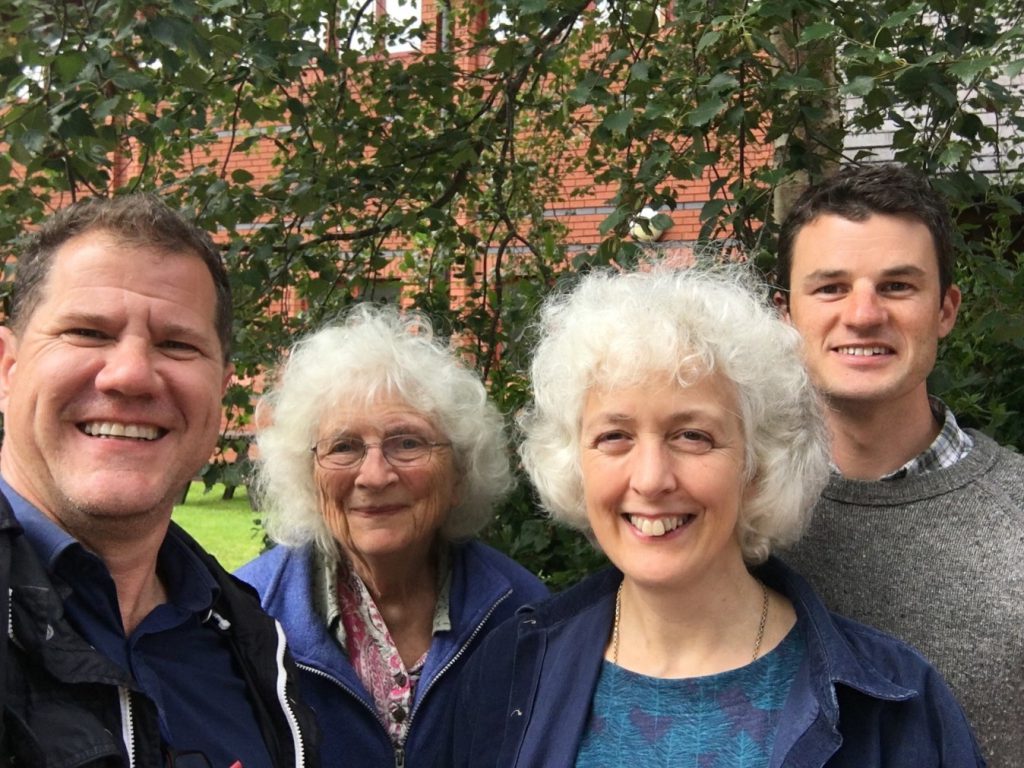
From its early pioneers, Dr Pat Denne, Dr Sian Turner and Mark Mitchell, through to the newest generation represented by Dr Rory Shaw, the laboratory has always been driven by a shared commitment to scientific excellence and customer service.
The success of the last 25 years is also a testament to the many colleagues who have contributed along the way. Their hard work, enthusiasm and professionalism have helped build the reputation that clients know and trust today.
Looking ahead
While we’re incredibly proud of what has been achieved over the last 25 years, we’re equally excited about what lies ahead.
By combining decades of experience with ongoing investment in knowledge, technology and people, we remain committed to delivering the high-quality expertise our clients rely on.
As we celebrate this remarkable anniversary, we extend our sincere thanks to our clients, colleagues, partners and everyone who has been part of our journey.
Together, you’ve helped shape the last 25 years. Here’s to the next 25 years of discovery, innovation and root investigation excellence.
We are thrilled to announce that Innovation Group has achieved an incredible milestone, three major industry awards in just a few months. This is a proud moment that reflects the exceptional talent, innovation, and dedication of our teams across both the motor and property divisions.
Following our recent win of Claims Service of the Year (Motor) at the Insurance Times Claims Excellence Awards 2025 and Claims Initiative of the Year (Property) at the British Insurance Awards 2025, we have now been named Claims Service Provider at the Insurance Times Tech and Innovation Awards 2025.
In May 2025, our Third-Party Intervention team in the motor division was honoured with the prestigious Claims Service of the Year – Motor award.
In July, our groundbreaking EKS solution for subsidence claims took home the title of Claims Initiative of the Year, recognising the innovative, customer-centric approach that is transforming the property claims experience.
Now in September, the EKS solution has once again been recognised, earning us the Claims Service Provider of the Year award at the Tech and Innovation Awards. This solution represents the culmination of many years of dedication from both Richard, Allan Tew and their team. We are absolutely delighted that their creativity, resilience, and relentless commitment to delivering innovative solutions to the insurance market have been recognised with such a prestigious honour.
A special thanks to Richard Rollit and Craig Fookes, who were there on the evening to collect the award on behalf of Innovation Group, which was presented by Shaun Williamson.
The judges commented; “They are approaching the issue from a unique perspective. They’ve thoroughly evaluated how to address a serious structural and insurance challenge in a non-invasive way. It’s a truly distinctive offering.”
John Watson, Managing Director, UK Insurance commented; “To be recognised in both the property and motor spaces is a huge honour and a true testament to the passion, innovation, and hard work of our people. A huge thank you to everyone who has been a part of this journey – this achievement belongs to all of us.”
We extend our sincere thanks to the British Insurance Awards, the Insurance Times Claims Excellence Awards and Tech and Innovation Awards for these recognitions, and our warmest congratulations to all fellow winners and finalists.
We’re proud to be triple award winners and even prouder of the incredible teams that made it happen.
Media Contact:
Sarah Middleton
Marketing Manager
salesandmarketing@innovation.group
HDI Insurance and the Solvd Group, a global leader in digital solutions for claims and repair management, are entering into a long-term strategic partnership. At the core of the collaboration, HDI Insurance will in future make use of the Solvd Group’s processes and services in the areas of repair shop networks and claims analysis. Together, both partners aim to further develop these services and set new standards.
As part of the partnership, the Solvd Group will acquire SSV Schadenschutzverband GmbH from HDI Insurance and integrate it into its service portfolio in order to further expand its business with private customers, fleets, and OEMs.
Going forward, the Solvd Group and its subsidiaries – including ControlExpert and Innovation Group – supported by SSV Schadenschutzverband GmbH, will take over key services for HDI Insurance such as repair shop management and invoice verification. The collaboration is designed for the long term and secures both the expertise of SSV employees and the proven services of the repair shop network.
For HDI Insurance, the partnership offers the opportunity to realize economies of scale and to leverage innovations in the repair market more quickly. Cooperation with the Innovation Group’s repair shop network ensures even broader regional coverage and improved services for HDI customers. The claims platform Gateway efficiently connects insurers, repair shops, and partners, integrating all processes in claims and repair management. This ensures clear, digital workflows that also benefit repair shop partners through more assignments, an expanded customer network, and reduced administrative effort.
The Solvd Group views the partnership as an important step in further expanding its end-to-end claims and repair management. With the help of modern technologies and artificial intelligence, all process steps will be interconnected—from claims reporting through to full repair. The Solvd Group’s vision: enabling claims settlement in under one day.
Statements on the partnership:
Sebastian Lins, Chief Markets Officer, Solvd Group says: “The partnership with HDI Insurance is a strong signal to the market: it shows that leading insurers place their trust in our experience, our technological expertise, and our integrated solutions. Together, we are setting new benchmarks in claims management—efficient, transparent, and future-ready. For us, this step is further proof that as a neutral and reliable partner, we can create added value for the entire industry.”
Christoph Kemmner, Head of SHUK Claims at HDI Insurance and Managing Director at SSV Schadenschutzverband GmbH, adds: “With the Solvd Group, we are actively shaping the future of claims management. By combining modern digital infrastructure with the long-standing expertise of SSV Schadenschutzverband GmbH, we are setting new standards in service and process quality. This partnership enables us to further strengthen our excellent claims service while keeping contributions stable for our customers.” The Solvd Group unites market-leading companies such as ControlExpert, GT Motive, Innovation Group, and, in future, SSV Schadenschutzverband GmbH under one roof. With decades of experience and cutting-edge technology—including artificial intelligence—the group delivers pioneering solutions for claims and repair management.

What is Greenwashing?
Greenwashing is the practice of creating a false or misleading impression about how environmentally friendly a product, service, or process really is. Companies use this marketing tactic to capitalise on the rising demand for sustainability, often exaggerating their eco-friendly claims without making meaningful changes.
In the subsidence industry, greenwashing can occur when repair methods, materials or processes are marketing as sustainable or environmentally beneficial, but in reality, they provide little to no genuine environmental advantage.
But how does this apply to the subsidence industry? Below is a real-world example:
Balancing Tree Preservation and Subsidence Claims
The Challenge: Tree Removal vs Sustainable Subsidence Solutions
In recent years, insurers have faced increasing accusations of greenwashing over the removal of mature, often protected trees to mitigate subsidence risks. Subsidence occurs when the soil beneath a building’s foundation shifts or contracts, commonly due to tree roots extracting moisture from clay-based soils.
While insurers emphasise the need for effective and cost-efficient solutions, environmental campaigners argue that widespread tree removal undermines broader sustainability commitments. The debate has sparked national attention, with protests erupting in Fareham, Cowfold, and Wivenhoe, where campaigners have fought to save mature oak trees from felling.
Protesters claim that insurers are prioritising cost savings over environmental responsibility, while insurers argue that alternative engineered stabilisation methods, such as underpinning or soil moisture management, are often prohibitively expensive and not always viable. The controversy highlights the delicate balance between environmental preservation and the practicality of subsidence claims management – a challenge that continues to shape the industry’s approach to sustainability.
The Debate: Weighing Both Sides
A recent case in Fareham highlights the complexity of balancing subsidence management and tree preservation. The local council approved the removal of a row of protected oak trees, each subject to Tree Preservation Orders (TPOs), citing concerns that rejecting the application could leave them exposed to claims exceeding £225,000.
Insurers defend their approach, stating that while they recognise the amenity value of trees and consider alternatives such as pruning, relying solely on engineered stabilisation would lead to significantly higher premiums for homeowners. They argue that tree removal remains the most cost-effective and practical solution in many cases.
However, the decision has faced strong political and public backlash. Local MP Suella Braverman criticised insurers, stating:
“Insurance companies have pressured local authorities into felling perfectly healthy trees with TPOs at the first point of contact.”
Braverman also pointed to ongoing discussions between the Association of British Insurers (ABI), Defra, and Forestry England, aimed at improving industry protocols for addressing subsidence linked to protected trees.
This case underscores the ongoing tension between insurers, policymakers, and environmental advocates.
Current Initiatives: The JMP and ABI Efforts
The Association of British Insurers (ABI) is currently reviewing the Joint Mitigation Protocol (JMP), a framework designed to standardise evidence requirements and procedures for Loss Adjusters and Local Authorities when dealing with subsidence caused by council-owned trees. While the updated JMP will establish clear evidential standards, it will not alter the legal liability of Councils, which remains rooted in their duty to abate legal nuisances caused by vegetation.
At the heart of this challenge lies a long-standing legal principle: property owners are responsible for ensuring their trees do not cause damage to neighbouring properties. If tree roots are proven to be the primary cause of subsidence, the property owner – whether a private homeowner or a local council – is legally obligated to remediate the issue, which often results in tree removal.
Balancing Environmental and Cost Considerations
Insurers argue that removing trees to stabilise a property has several advantages:
However, critics push for a more balanced approach, particularly when dealing with high-amenity trees protected by Tree Preservation Orders (TPOs). They argue that insurers should explore alternative solutions before resorting to tree removal, ensuring that sustainability considerations are genuinely factored into decision-making.
Possible Solutions and the Role of Legislation
Some insurers have already adopted policies against removing ancient or veteran trees, acknowledging their environmental, ecological, and cultural significance. However, to further address greenwashing concerns while maintaining fairness and practicality, the ABI could explore the following initiatives:
Voluntary Codes of Practice – Insurers could commit to a formal industry standing that prioritises tree preservation wherever possible, particularly for protected and high-amenity trees. This would reinforce sustainable claims practices whiles ensuring insurers consider alternative mitigation methods before resorting to removal.
Legislative Change: Article 5 Certificates – A potential reform could introduce Article 5 certificates, which would provide councils with financial protection when refusing tree removal for exceptional cases. Under this system, councils could preserve significant trees without facing liability for subsequent property damage, creating a more balanced approach between subsidence risk management and environmental preservation.
Conclusion: Striking the Right Balance
The debate surrounding tree removal and subsidence highlights the complex intersection of environmental, financial, and legal considerations. A balanced approach is essential – one that safeguards both property integrity and environmental preservation.
While voluntary industry codes could provide an immediate step toward more responsible practices, long-term solutions may require legislative reform, such as the reintroduction of Article 5 certificates. This would offer councils a sustainable and equitable framework to protect significant trees without bearing the financial burden of potential property damage claims.
Ultimately, collaboration is key. Insurers, councils, and policymakers must work together to align competing priorities, ensuring that subsidence management evolves in a way that protects both homeowners and the natural environment.
In today’s evolving insurance landscape, MGAs are expected to deliver faster, smarter, and more cost-effective claims solutions, without compromising on customer experience. At Innovation Group, we understand these pressures. For over 25 years, we’ve been the trusted partner to some of the world’s leading insurers, brokers, and MGAs, providing technology-driven, people-led claims solutions that deliver real impact.
Whether its managing complex property claims or streamlining motor claims at scale, we combine deep technical expertise with advanced digital tools and an end-to-end supply chain. The result? Better outcomes for your business and your customers.
Tailored for MGAs: Built-In Agility, Backed by Data
MGAs need to operate with agility, precision, and a distinctive edge. That’s why we don’t offer off-the-shelf solutions. Instead, we align with your operational model, combining automation, analytics, and human expertise to help you deliver standout service, maintain compliance, and maximise value.
Why MGAs Choose Innovation Group:
Our omni-channel journey, from FNOL to settlement, is clear, simple and jargon-free. Customers stay informed and in control through SMS, push notifications, chatbots, and explainer videos, driving satisfaction and reducing complaints.
By reducing indemnity spend, shortening claim lifecycles, and automating admin-heavy tasks, we help you unlock savings while allowing teams to focus on what really matters most – supporting customers and controlling your spend.
Our advanced analytics and PowerBI dashboards give MGAs live visibility over performance and risk. This enables smarter underwriting, early intervention, and proactive claims and portfolio management.
Whether for Motor, Property or Liability losses, we offer true 24/7 end-to-end management of the claim for you and your customers. This provides our clients with defined ownership and true accountability for results.
Motor Claims: Digitally Driven, End-to-End Control
With more than 300,000 FNOLs handled annually, we offer 24/7 motor claims management with rapid triage, seamless intervention, and full visibility throughout. Our AI-powered chatbot accelerates third-party capture and supports our in-house repair triage, driving cost control and improving conversion.
Our digital-first ecosystem keeps customers informed throughout their journey, leveraging mobile phone Wallet technology for real-time push updates, and our Virtual Assistant to answer common queries instantly. It’s a modern claims experience that feels as effortless as it is efficient.
Through our nationwide repair network of over 200 trusted partners, we achieve market-leading conversion rates (over 80%) and drastically reduce costly non-network repairs.
This technology led solution is supplemented by exceptional technical handling for credit hire and personal injury losses by our team of experienced handlers.
Property Claims: Technical Strength Meets Total Control
We do more than manage claims – we own the process. Our fully integrated in-house property supply chain gives us complete control over delivery, quality, and cost. From drainage and reinstatement to arboriculture and underground services, we ensure consistency and speed, even during surge events.
Our Chartered Loss Adjusters and Claims Specialists support MGAs across all key property and casualty classes:
We understand the nuances of MGA portfolios and policy wordings, and we’re well-versed in London Market standards. As a Lloyds Claims administrator, we’re strategically positioned to bring even greater value to London market clients.
Transparency Through Technology: The Business Intelligence Portal
Our PowerBI-powered Business Intelligence Portal, gives clients a single, real-time view of claims performance. With interactive dashboards and deep-dive analytics, MGAs benefit from:
It’s more than just reporting it’s a strategic tool to drive sharper, faster decisions.
Technology and Talent: A Smarter Claims Ecosystem
At Innovation Group, we believe the best results come from the right balance of technology and people. We invest in intelligent systems that enhance – not replace – our team’s expertise. From automated workflows and smart risk modelling to intuitive communication tools, we empower MGAs to deliver with clarity, speed and control.
Our platforms are built to flex with the demands of your business, especially during surge events. And as our technology continues to evolve, we’re constantly finding new ways to improve efficiency, compliance and customer experience.
A Proven Partner for MGAs
MGAs need more than a service provider. They need a partner who understands their challenges, aligns with their goals, and delivers every time. Whether it’s scaling operations, improving claims economics, or elevating the customer journey, Innovation Group is the partner MGAs trust to deliver.
Let’s Talk
Ready to explore a smarter, more transparent, and more agile approach to claims? Let’s talk about how we can support your strategy, and help your business stand out in a competitive market.
Contact us today to discover how we can support your claims strategy:
Published on MGAA (Innovation Group: Redefining Claims Management for the MGA Market – MGAA)
According to the Association of British Insurers (ABI), UK motor insurers paid out a record £11.7bn in claims during 2024 — a 17% increase on the previous year. The average private motor insurance claim rose by 13% to approximately £4,900, with costs peaking at £5,300 in Q4 alone. This is despite an overall drop in claims frequency being reported across the market.
In 2023, total motor claims stood at £9.9bn, already up 18% year-on-year from £8.4bn in 2022. That period also saw a 31% increase in vehicle repair costs, reaching £6.1bn, while replacement vehicle expenses rose 35% to £597m.
This sustained inflationary pressure highlights the urgent need for robust, end-to-end claims procedures, particularly in managing third-party exposures. With credit hire, repair delays, and extended off-road times driving up third-party costs, having proactive controls in place is more critical than ever.
Key procedural pillars include:
“We work closely with our partners to provide market leading solutions,” said Cath Hulme, Operations Director Motor. “We have developed a proven, results-driven proposition that delivers tangible financial benefits for both our clients and our own operations. I’m delighted to share that our strategic approach has enhanced operational efficiency, increased third-party capture rates, and improved the end-to-end claims experience.”
“In addition, our strong focus on employee engagement and culture has boosted morale, improved retention, and created a high-performance environment that supports service excellence.”
To learn more about our Innovation Group’s award-winning claims management solutions, email: salesandmarketing@innovation.group
Published on ILC (Managing escalating claims costs: the case for robust third-party control – I Love Claims)


